
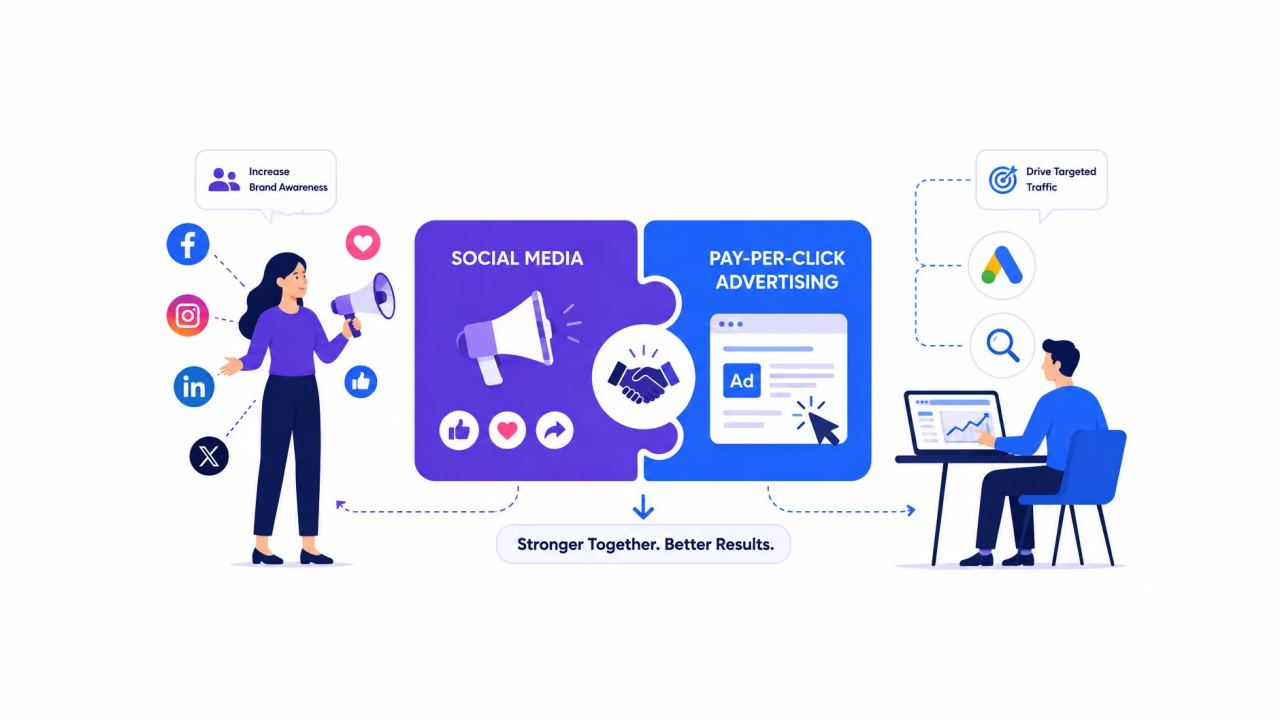
In the world of digital marketing, social media and Pay-Per-Click (PPC) advertising are often managed as separate silos. One team focuses on “likes” and engagement, while another focuses on keywords and conversion rates.
But if you are managing them separately, you are leaving money on the table.
When you align your organic social media presence with your paid search strategies, you create a powerful “multiplier effect.” You aren’t just buying traffic; you are building an authoritative brand story that follows your potential customers wherever they go, significantly lowering your customer acquisition costs (CAC) in the process.
The Two Sides of the Same Coin
To understand the synergy, think about the buyer’s journey:
- The “Need” (PPC): Your customer is actively searching for a solution to a problem. They type a keyword into Google. Your PPC ad shows up at the exact right moment. This is intent-based marketing.
- The “Trust” (Social Media): That same customer sees your ad, but they aren’t ready to buy yet. They click over to your Instagram, LinkedIn, or Facebook page to see if you are legitimate. This is trust-based marketing.
If your PPC ad promises a high-end service, but your social media feed is empty or looks unprofessional, the customer will bounce. But when your social media presence is active, vibrant, and showcases your expertise, it validates the promise of your PPC ad.
How They Feed Into Each Other to Lower Costs
Running these channels in harmony does more than just look professional; it actually makes your marketing budget more efficient.
1. Increased Quality Score and Ad Performance
When your social media channels drive brand awareness, more people start searching for your brand name by direct request. This brand recognition signals to search engines that you are a reputable entity, which can improve your Quality Score in Google Ads. A higher Quality Score typically means you pay less per click for your ads.
2. Retargeting with a Purpose
Social media allows you to build a community and nurture an audience that isn’t quite ready to convert. By using pixels and tracking tags, you can take those followers who engaged with your organic content and serve them specific, highly relevant PPC ads. You are no longer paying to advertise to “cold” traffic—you are advertising to people who already know and trust your brand.
3. Data-Driven Feedback Loops
Your social media metrics are a goldmine for your PPC strategy. If a particular topic or message resonates with your audience organically, that’s your signal to turn that message into a paid campaign. Conversely, if you notice your PPC keywords are driving high traffic but low conversions, you can use social media content to address those specific customer pain points and “warm up” your future leads before they even see an ad.
Building a Cohesive Brand Story
The goal of this synergy is to make your brand feel ubiquitous. When a prospect searches for a solution, sees your professional ad, and then sees your brand pop up in their social feed with helpful, value-driven content, you stop being just another search result. You become a familiar authority in their industry.
This consistency doesn’t just make you look bigger—it makes you more memorable. And in the digital space, being memorable is the best way to lower the cost of every single conversion you secure.
Is your marketing strategy working together, or pulling apart? At DPOINTED LLC, we specialize in building full-funnel digital systems. We don’t just manage ads or post to social media—we orchestrate them to work in tandem, driving visibility and measurable growth for your business. Let’s talk about integrating your digital strategy today.
